Currently Empty: $0.00
13.5 HP to 25 HP: Understanding TYPHON Mini Excavator Engines
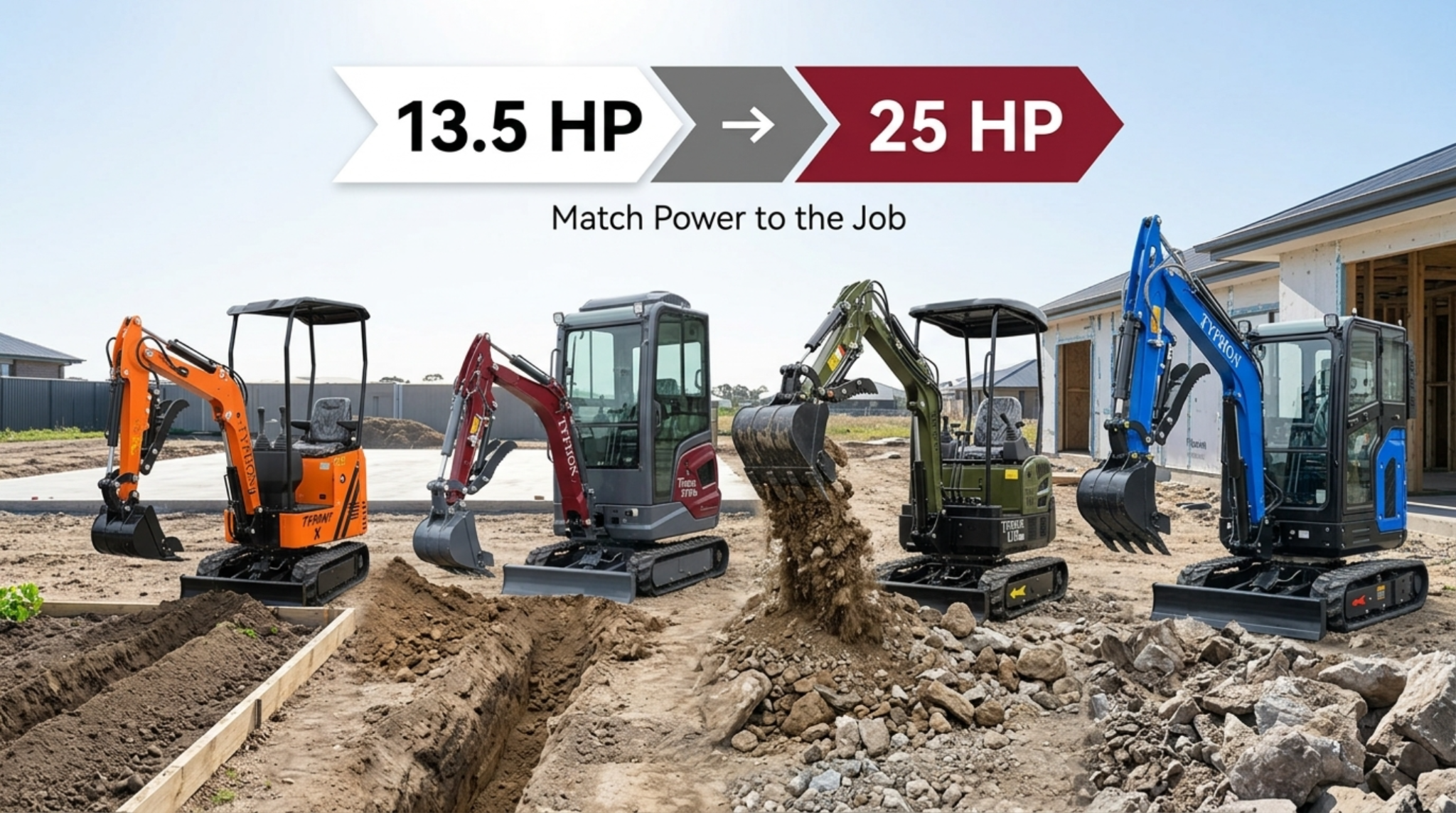
The engine is the heart of any mini excavator, quietly powering every dig, every hydraulic movement, and every foot the machine travels. Yet horsepower is often misunderstood, treated as a simple bigger-is-better number rather than a specification you should match carefully to your work. TYPHON mini excavators span a meaningful range of engine power, from a nimble 13.5 HP unit built for compact jobs to a stronger 25 HP engine ready for demanding applications. Each level serves a genuine purpose, and choosing the right one shapes how efficiently and economically your machine performs. This guide explains what engine horsepower actually does, walks through the strengths of each power level in the TYPHON range, and shows you how to weigh horsepower alongside the other factors that define real capability. By the end, you will know exactly which engine fits your work.
Understanding Mini Excavator Engine Horsepower
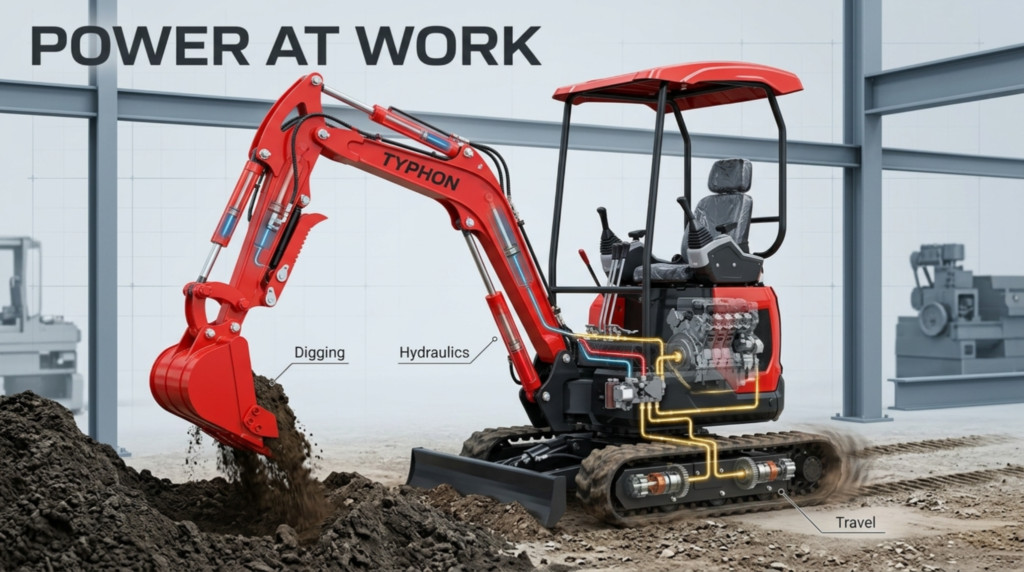
Engine horsepower is one of the most important factors in mini excavator performance, because it determines how much power the machine has available to do its work. That power is not spent on a single task. Instead, it flows across three core functions: digging, hydraulics, and travel. When you understand how horsepower feeds each of these, you gain a clearer sense of what an engine rating really means for the way a machine performs on your site.
Digging is the most obvious demand on the engine. Every time the arm breaks into the ground and fills the bucket, the machine draws on engine power to generate the force that cuts through soil and lifts the load. Hydraulics represent the second major demand, and it is a large one. A mini excavator’s arm, boom, bucket, dozer blade, and any attachments all run on hydraulic power, which the engine supplies by driving the hydraulic pump. More engine power can support stronger, more sustained hydraulic performance, which matters enormously for both digging and running attachments. Travel is the third function, powering the tracks that move the machine around a site and reposition it between tasks.
TYPHON mini excavators span different horsepower levels precisely because jobsite requirements vary so widely. A light landscaping job and a demanding excavation project place very different demands on a machine, and no single engine rating suits every task equally well. By offering a range from 13.5 HP through to 25 HP, TYPHON lets you match the engine to the work rather than forcing every job onto the same machine. This is why understanding horsepower is the starting point for a smart choice: it is the foundation on which digging force, hydraulic capability, and travel performance are all built, and matching it to your needs is what turns a capable machine into the right machine.
13.5 HP Engines for Compact Jobs
The 13.5 HP engine sits at the agile end of the TYPHON range, and it delivers practical, dependable performance for a well-defined set of tasks. This power level is well suited to lighter excavation, landscaping, trenching, and property-maintenance work, the kinds of jobs where the machine needs to be capable without being oversized. For these applications, a 13.5 HP engine provides the digging and hydraulic performance the work genuinely requires, allowing an operator to move soil, cut trenches, and shape ground efficiently on a compact, easy-to-handle machine.
What makes this power range so effective for compact jobs is the way it pairs with a smaller, lighter machine. When maneuverability and easy access are priorities, a 13.5 HP excavator shines. Consider the situations where this engine level fits best:
- Tight residential sites where the machine must pass through gates, along narrow paths, or between structures.
- Landscaping works around finished surfaces, gardens, and established features that a larger machine could damage.
- Trenching and property maintenance where the tasks are lighter but frequent, and getting into confined areas matters more than raw power.
A machine built around a 13.5 HP engine is inherently compact, which is exactly the point. It can reach areas larger excavators cannot, work close to buildings and boundaries, and be transported easily between sites. For contractors, landscapers, and property owners whose work centers on these lighter, access-sensitive tasks, this engine level offers a sensible match of power to purpose. It avoids the cost and bulk of a larger machine while still delivering the performance these jobs demand. Choosing a 13.5 HP TYPHON excavator is a practical decision for anyone whose priority is agility and access rather than heavy-duty digging, and it reflects the value of matching engine power sensibly to the real nature of the work.
Mid-Range Engine Power for Versatile Work
Between the compact 13.5 HP machines and the more powerful 25 HP models sits a mid-range of engine power that offers a genuinely versatile balance. Engines in this bracket are designed to deliver a sensible compromise, combining solid digging capability, dependable hydraulic performance, and efficient operation in a single package. For work that has outgrown the lightest machines but does not quite demand the heaviest, this middle ground is often the sweet spot, giving contractors more capability without pushing them toward a larger, costlier excavator.
The appeal of mid-range power lies in its adaptability. A machine in this class can handle a broader mix of tasks than a compact unit, digging deeper and harder, running attachments more capably, and sustaining longer, more demanding work sessions, while still remaining reasonably compact and manageable. This makes it a strong choice for contractors whose work varies from day to day and who need one machine that can turn its hand to many jobs. Rather than being specialized for the lightest or the heaviest tasks, a mid-range excavator is built to be a dependable all-rounder.
Efficiency is an important part of this balance, and it deserves emphasis. A mid-range engine is sized to provide meaningful capability without consuming the fuel or carrying the bulk of a larger machine, which helps keep operating costs in proportion to the work. For a contractor weighing performance against running costs, this balance is exactly what makes the mid-range attractive. You gain the ability to take on more demanding jobs without committing to the expense and footprint of a full-size machine. This is the practical reasoning behind choosing mid-range power: it serves the many operators who need more than a compact machine can offer but who value versatility, efficiency, and a manageable size over maximum digging force. For that large and common group, a mid-range TYPHON excavator represents a well-judged, cost-effective match of capability to need.
25 HP Engines for More Demanding Applications
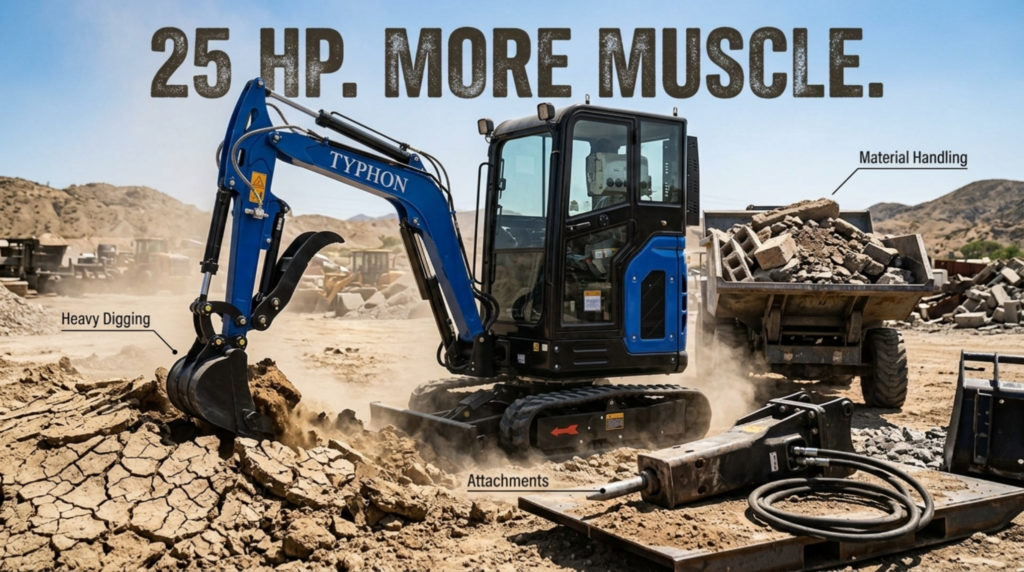
At the stronger end of the TYPHON range, the 25 HP engine is built for work that asks more of a machine. This higher power level provides greater force for heavier digging, more substantial material handling, and more demanding attachment work, giving the excavator the muscle to take on tasks that would strain a smaller engine. When the ground is harder, the loads are heavier, or the job runs longer and more intensely, a 25 HP engine delivers the sustained power that keeps the machine productive rather than struggling.
The advantages of this power level show up across several kinds of work. Consider where a 25 HP engine earns its place:
- Heavier digging through firmer, more compacted, or more resistant ground where extra force makes the difference between steady progress and slow going.
- Material handling of larger, heavier loads that demand both digging strength and robust hydraulic lifting capability.
- Attachment work running power-hungry tools such as augers, breakers, and other hydraulic attachments that depend on strong, consistent hydraulic supply.
Attachment performance is a particularly important reason to consider this engine level. Many hydraulic attachments draw heavily on the machine’s power, and a stronger engine supports the hydraulic flow and pressure these tools need to work effectively. For operators who rely on a range of attachments to expand what their excavator can do, the 25 HP engine unlocks that versatility in a way smaller engines cannot always match.
What makes this power level especially valuable is that it delivers heavier-duty capability while the machine retains a compact footprint. You gain the strength to tackle demanding tasks without moving up to a full-size excavator, keeping the maneuverability and site access that make mini excavators so useful. For contractors whose work regularly involves tough digging, heavy material, or serious attachment use, a 25 HP TYPHON excavator offers the power those jobs require in a machine that still fits where larger equipment cannot. It is the dependable choice when the work demands more.
Choosing the Right Engine Power
Selecting the right engine power comes down to matching the machine honestly to your work rather than reaching automatically for the highest horsepower figure. The best engine for you depends on several practical considerations: the type of work you do, your attachment requirements, the digging conditions you typically face, and the working space available to you. Weighing these together points you toward the power level that genuinely fits, whether that is the agile 13.5 HP, a versatile mid-range engine, or the stronger 25 HP.
Horsepower alone, however, never tells the whole story. To judge a machine’s true capability, you should compare engine power alongside several other specifications that shape how it performs. Consider these factors together:
- Hydraulic flow, which determines how well the machine powers its arm, boom, and attachments, and is central to both digging and running hydraulic tools.
- Digging force, the actual breakout and bucket force the machine can apply, which reflects real digging capability more directly than horsepower on its own.
- Operating weight, which anchors the machine for stable, powerful work and influences how it performs on your ground.
- Machine size, which governs whether the excavator fits your sites, passes through tight access points, and transports easily between jobs.
These specifications work together, so a sound decision balances them against your real needs rather than viewing horsepower in isolation. A machine with strong hydraulic flow and solid digging force, matched to an appropriate weight and size, will often serve you better than one chosen on horsepower alone. The relationship between these figures is what defines genuine capability.
The dependable approach is to define your typical work first, then match the engine and its supporting specifications to that work. If you handle lighter, access-sensitive tasks, a 13.5 HP machine may be ideal. If your work varies widely, a mid-range engine offers versatile balance. If you regularly face heavy digging and demanding attachments, the 25 HP engine provides the power you need. By comparing horsepower alongside hydraulic flow, digging force, operating weight, and machine size, you gain a complete picture of what a TYPHON mini excavator can do, and you choose with the confidence that the machine truly fits the job.
Conclusion
Engine horsepower shapes everything a mini excavator does, from the force it brings to digging and the strength of its hydraulics to the way it moves around a site. Across the TYPHON range, that power spans from a compact 13.5 HP engine to a robust 25 HP unit, with versatile mid-range options in between. Each level serves a real purpose. The 13.5 HP engine excels at lighter excavation, landscaping, and trenching where maneuverability and access matter most. Mid-range power offers a balanced, efficient all-rounder for contractors who need more capability without a larger machine. The 25 HP engine delivers the strength for heavier digging, material handling, and demanding attachment work while keeping a compact footprint. Choosing well means looking beyond horsepower alone, comparing it against hydraulic flow, digging force, operating weight, and machine size to see the full picture. Define your work first, then match the machine to it, and a TYPHON mini excavator will reward you with dependable, efficient performance built around the power your jobs genuinely require.
Frequently Asked Questions
1. What does engine horsepower actually affect on a mini excavator?
Engine horsepower determines how much power the machine has available for its core functions, and that power is spread across three main areas: digging, hydraulics, and travel. Digging draws on engine power to generate the force that cuts through soil and fills the bucket. Hydraulics represent a large demand, since the arm, boom, bucket, dozer blade, and any attachments all run on hydraulic power that the engine supplies by driving the hydraulic pump, so more engine power can support stronger, more sustained hydraulic performance. Travel is the third function, powering the tracks that move and reposition the machine. Because horsepower feeds all three, it forms the foundation on which digging force, hydraulic capability, and travel performance are built. This is why understanding horsepower matters as a starting point, though it should always be weighed alongside other specifications rather than viewed as the sole measure of capability.
2. Is a 13.5 HP TYPHON excavator powerful enough for my work?
It depends entirely on the kind of work you do. A 13.5 HP engine provides practical, dependable performance for lighter excavation, landscaping, trenching, and property-maintenance tasks. If your work centers on these lighter, frequent jobs, this engine level offers the digging and hydraulic performance you need on a compact, easy-to-handle machine. It is especially well suited to situations where maneuverability and easy access are priorities, such as tight residential sites, landscaping around finished surfaces, and confined areas that larger machines cannot reach. The machine’s compact size lets it pass through gates, work close to buildings, and transport easily between sites. For contractors, landscapers, and property owners whose priority is agility and access rather than heavy-duty digging, a 13.5 HP machine is a sensible, cost-effective match. If your work regularly involves hard ground or heavy loads, however, you may be better served by a more powerful engine.
3. Who should consider a mid-range engine?
Mid-range engine power suits contractors who have outgrown the lightest machines but do not consistently need the heaviest. These engines deliver a balance of solid digging capability, dependable hydraulic performance, and efficient operation, making them versatile all-rounders. If your work varies from day to day and you need a single machine that can turn its hand to many jobs, the mid-range is often the sweet spot. A machine in this class can dig deeper and harder than a compact unit, run attachments more capably, and sustain longer work sessions, while staying reasonably compact and manageable. Efficiency is a key part of the appeal, since a mid-range engine provides meaningful capability without the fuel consumption or bulk of a larger machine, helping keep operating costs in proportion to the work. For the many operators who value versatility, efficiency, and manageable size over maximum digging force, mid-range power is a well-judged choice.
4. What are the advantages of a 25 HP engine?
A 25 HP engine provides greater power for more demanding work, including heavier digging, larger material handling, and more intensive attachment use. When the ground is harder, the loads are heavier, or the job runs longer and more intensely, this engine delivers the sustained power that keeps the machine productive rather than struggling. It handles firmer, more compacted ground where extra force makes a real difference, and it supports the digging strength and hydraulic lifting that heavier loads require. Attachment work is a particularly strong reason to choose this level, because many hydraulic attachments such as augers and breakers draw heavily on the machine’s power, and a stronger engine supports the hydraulic flow and pressure they need. Importantly, the 25 HP engine delivers this heavier-duty capability while the machine keeps a compact footprint, so you gain the strength for demanding tasks without losing the maneuverability and site access that make mini excavators so useful.
5. How do I compare engines beyond just horsepower?
Horsepower is important, but it never tells the whole story, so you should compare it alongside several other specifications that shape real capability. Hydraulic flow is central, since it determines how well the machine powers its arm, boom, and attachments for both digging and running hydraulic tools. Digging force, meaning the actual breakout and bucket force the machine can apply, reflects real digging capability more directly than horsepower on its own. Operating weight matters because it anchors the machine for stable, powerful work and influences how it performs on your ground. Machine size governs whether the excavator fits your sites, passes through tight access points, and transports easily. These factors work together, so a sound decision balances them against your genuine needs rather than viewing horsepower in isolation. Define your typical work and conditions first, then match horsepower, hydraulic flow, digging force, weight, and size to that work for a complete picture of capability.